Nash (1929)suggested that “Leadership implies influencing change in the conduct of people.”The influence of leadership style is a central issue in leadership research: the attitudinal patterns of leaders and their behaviors (Anderson and Sun, 2015). This blog intends to discuss the direction of leadership theories in a changing world through Volvo’s case.
The 21st century is an economic era where knowledge is the core commodity, and a rapid production of knowledge and innovation is critical to the survival of organizations (Boisot, 1998). Hitt (1998) mentions that “we are on the edge of an era,” in the past. Leadership methods based on rigid controls and mandatory orders are decreasingly compatible (Manville & Ober, 2003).
Early theories tended to focus on the characteristics and behaviors of successful leaders, and later theories began to discuss the pursuit of the role and background nature of leaders.
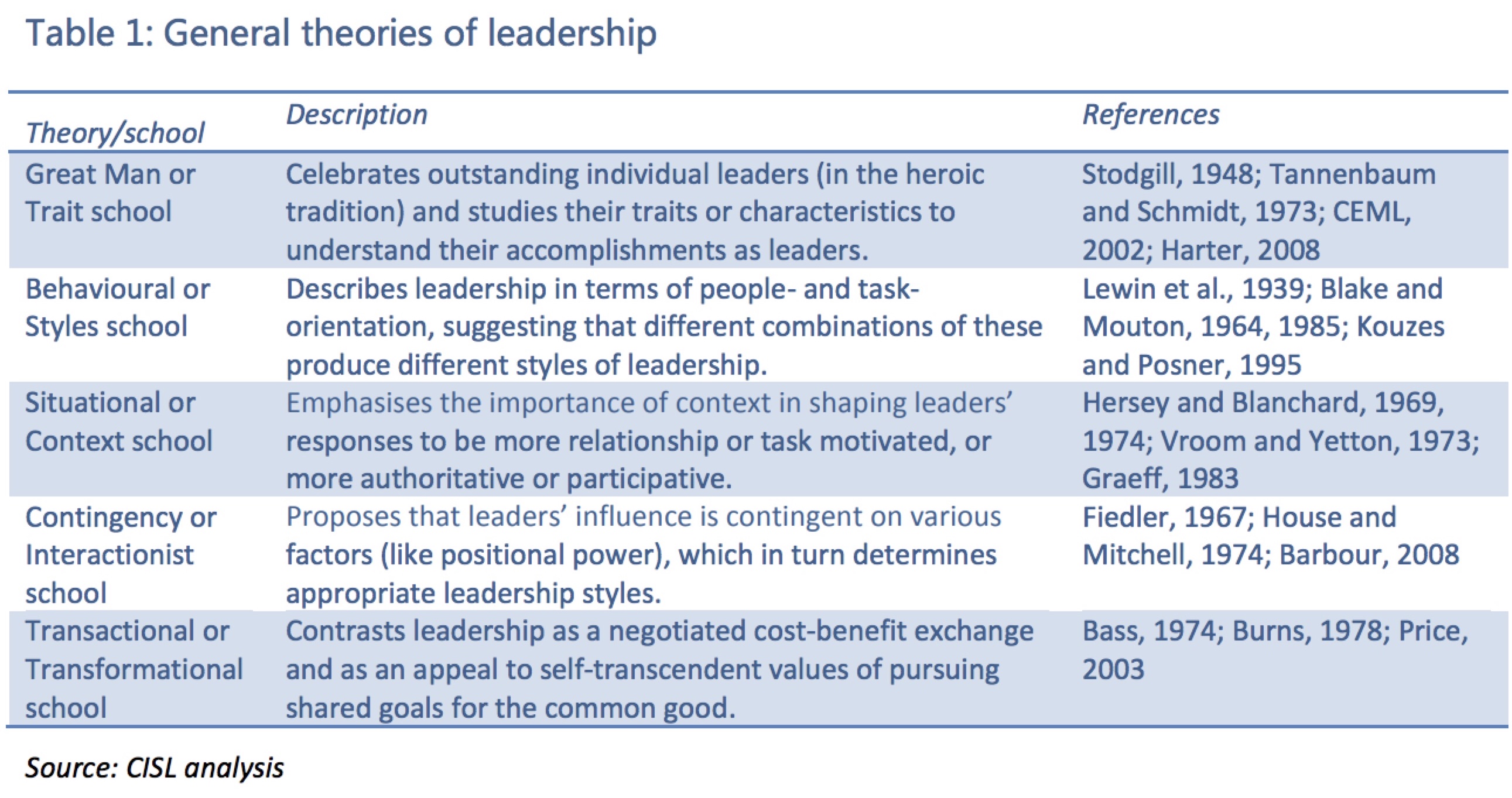
(Bolden et al, 2003)
The challenge of modern leadership theories
Uhl-Bien et al. (2007) suggest that the leadership models of the last century have been top-down. These models are very effective for the economy premised in which physical production, but not suitable for a knowledge-based economy. They propose leadership as a complex, interactive, dynamic that produces adaptive outcomes (such as learning, innovation, and adaptability).
Anderson and Sun (2015) reviewed several works of literature that have emerged since 2000 and the various new leadership styles they have proposed: ideological leadership, pragmatic leadership, authentic leadership, ethical leadership, spiritual leadership, distributed leadership, integrative public leadership and servant leadership.
On the other hand, some experts and scholars have criticized these leadership theories, arguing that they are mainly male theories based on Western work practices. Eagly is one of the essential researchers at this stage. Eagly and Johannesen-Schmidt (2002) provide a framework that incorporates many of the complexities of the empirical literature on female and male leadership styles.
Beaman et al. (2012) used a random natural experiment in India to demonstrate those female leaders can influence the career aspirations and education of adolescent girls.
Research on female leadership behaviors suggests that women tend to adopt a more lenient strategy than men when it comes to employee performance and goal achievement. Women often form alliances adaptively when engaging in competitive activities, while men are more exploitative and use partnerships to obtain personal benefits (Brad Chapman, 2017).
Gender equality challenge in the automotive industry
According to Eagly’s (2007), although women have excellent leadership skills, they are more likely than men to demonstrate leadership styles that are relevant to the effective performance of leaders. But more people prefer men than women as being their bosses, and women are more difficult to become leaders than men. The increasing attention of women leaders reflects significant progress in gender equality, but the issue of inequality cannot be eliminated. This is especially true in the automotive industry, 90 percent of auto examples say they need to change how they attract and retain talent, but only 10 percent say they do a good job of bringing women onboard (Autonews, 2016).
Sweden is recognized as a leader in affirmative action, and Volvo in Sweden faces the challenge of gender equality.
Volvo Car is committed to achieve an inclusive and gender balance with leaders. They plan to have a leadership position of greater than or equal to 35% by 2020, which should be held by women (Volvocars, 2019).
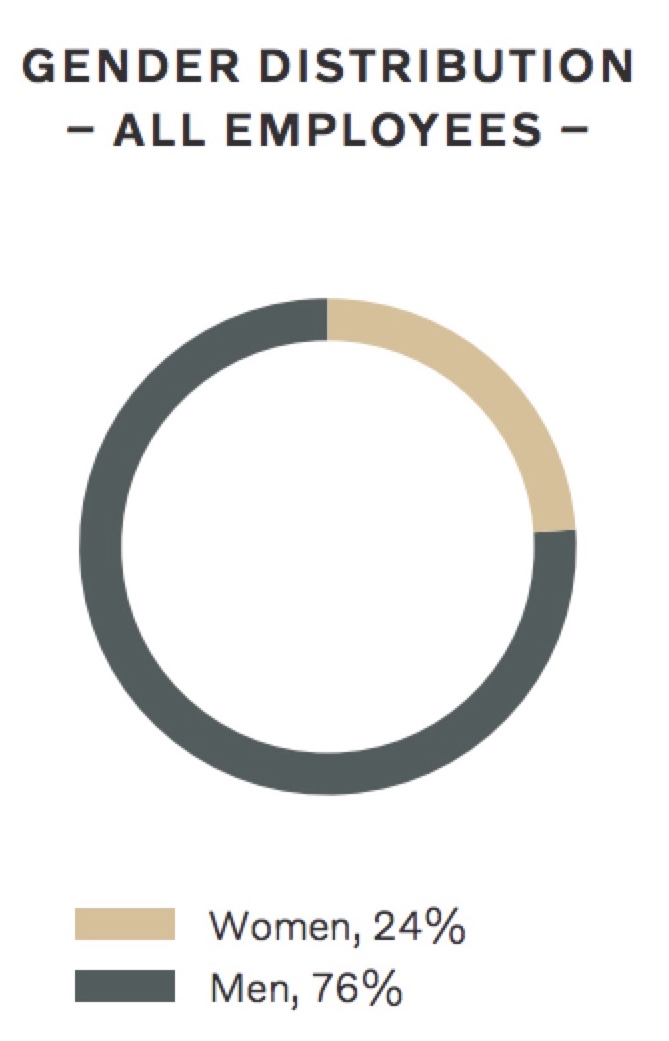
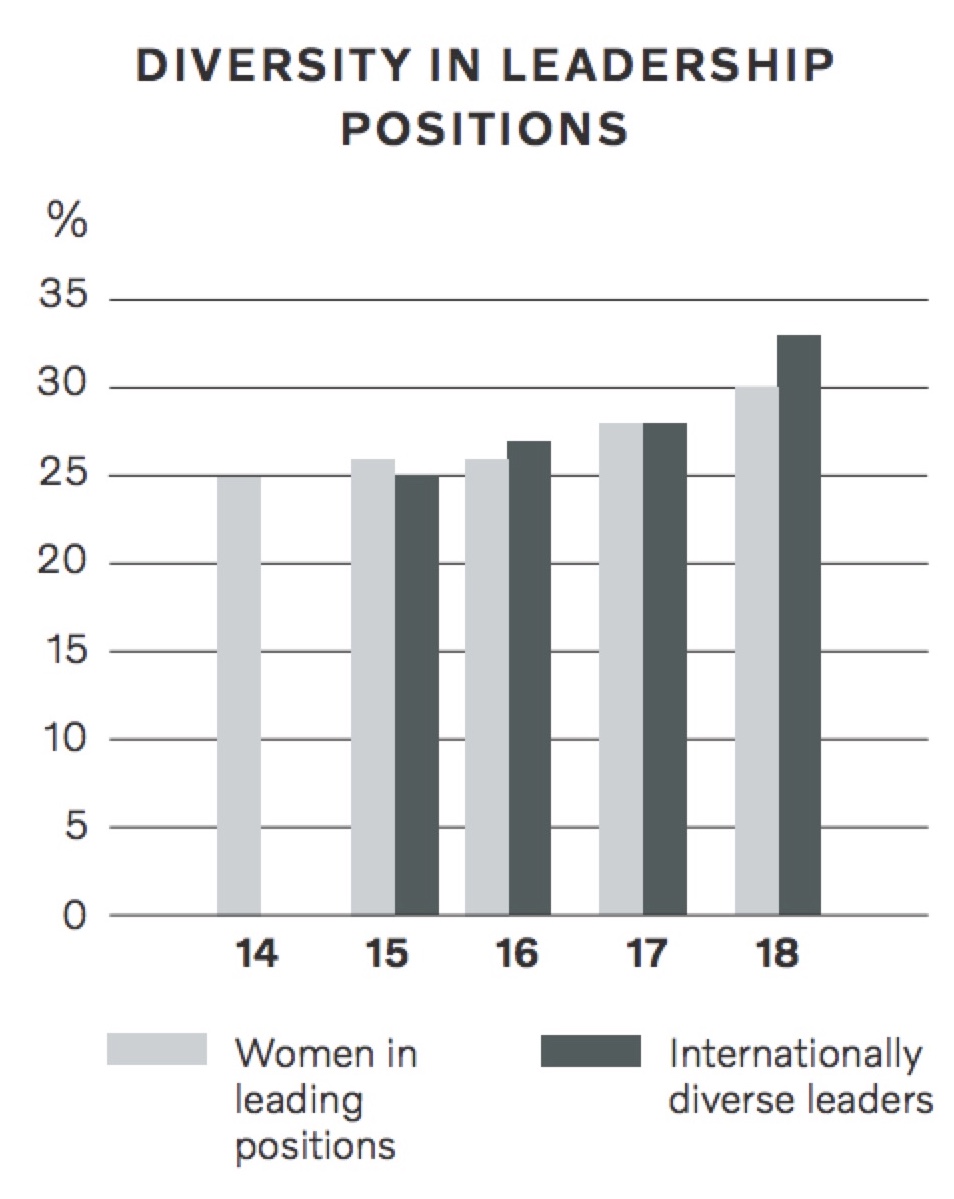
(Volvocars, 2019)
Future development of leadership style
Eagly and Chin (2010) argue that in a changing world, there must be a theory that is parallel to change and diversity, not only culturally but also sexually (pp. 216-224). Chin (2013) concludes in a survey on gender and population that the future leadership of the world is diversified. Diversity leadership is to be inclusive of all groups and all perspectives.
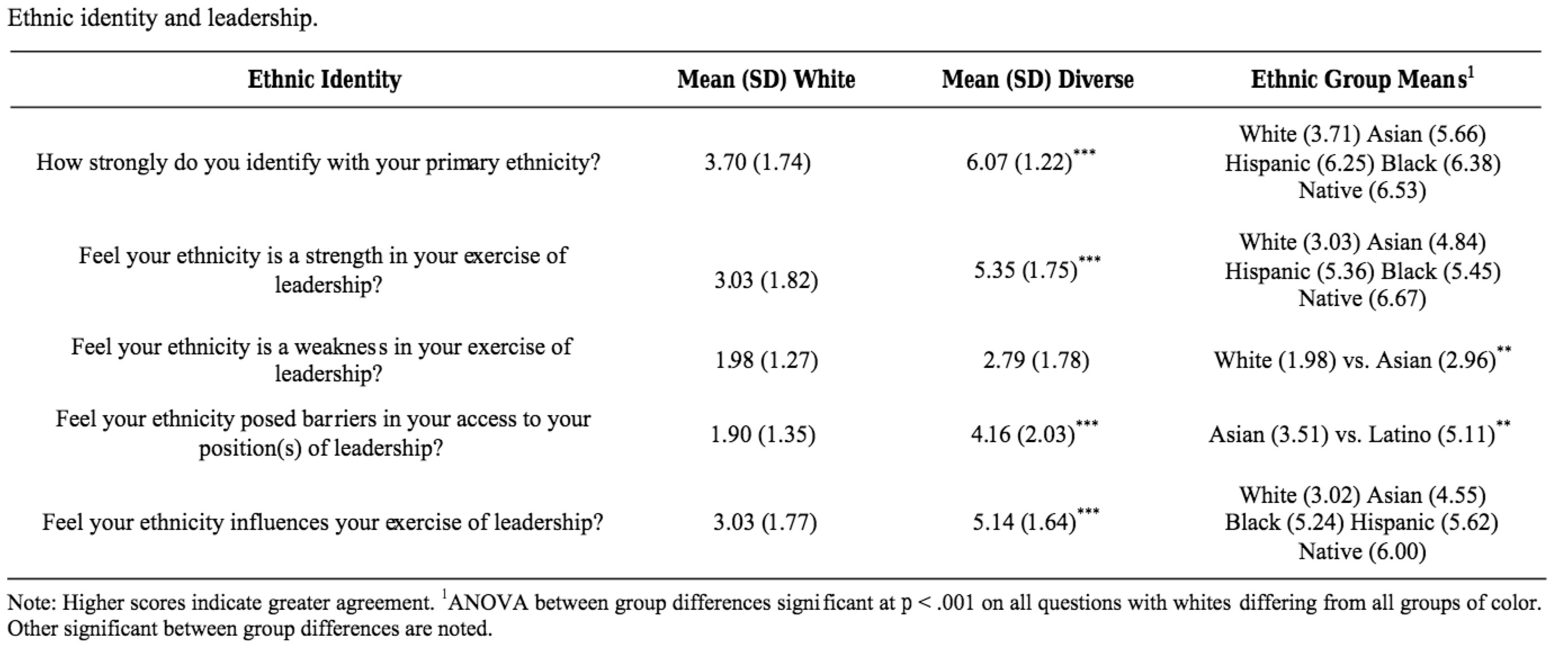
(Chin, 2013)
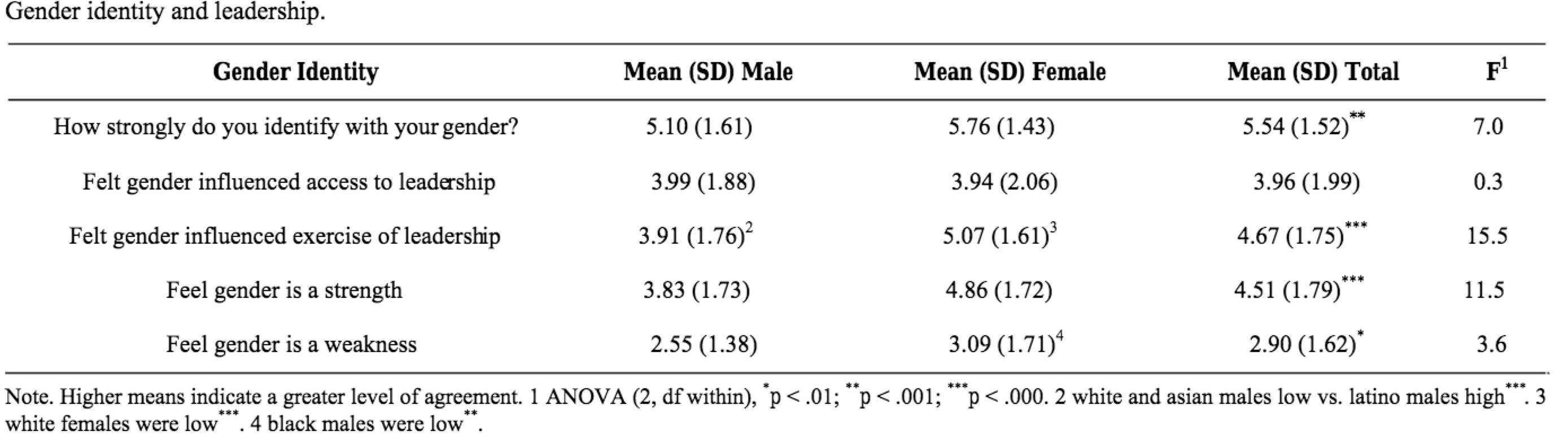
(Chin, 2013)
Volvo is not only a Swedish company, it is also a large multinational company, and they are particularly good at diversification. Volvo currently has more than 32% of its leadership positions as non-Swedish and has made plans to increase by more than 3% in the next two years (Volvocars, 2019). So the Volvo Group has done an excellent job in terms of gender, geography and ethnicity.
To some extent, contemporary leadership style is closely related to the changing world. A variety of leadership styles are parallel. On one hand, in line with the needs of organizational development. On the other hand, the inevitable choice of corporate management and humanization, to cope with this era of knowledge and innovation.
References
Anderson, M.H., Sun, P.Y.T. (2015) Reviewing Leadership Styles: Overlaps and the Need for a New ‘Full‐Range’ Theory. IJMR[Online],19(1),pp.76-96. Available at: https://onlinelibrary.wiley.com/doi/abs/10.1111/ijmr.12082[Accessed 6 Mar. 2019]
Autonews (2016) Auto industry must do more to close gender gap in leadership roles, report finds. Auto News[Online].Available at: https://www.autonews.com/article/20160428/OEM/160429825/auto-industry-must-do-more-to-close-gender-gap-in-leadership-roles-report-finds[Accessed 6 Mar. 2019]
Bettis, R.A., Hitt, M.A. (1995) The new competitive landscape. Strategic Management[Online],16 (S1), pp. 7-19. Available at: https://onlinelibrary.wiley.com/doi/abs/10.1002/smj.4250160915[Accessed 6 Mar. 2019]
Beaman, L., Duflo, E., Pande, R., Topalova, P. (2012) Female Leadership Raises Aspirations and Educational Attainment for Girls: A Policy Experiment in India.Science[Online], 335(6068), pp. 582-586. Available at: http://science.sciencemag.org/content/335/6068/582[Accessed 6 Mar. 2019]
Bolden, R., Gosling, J., Marturano, A. & Dennison, P. (2003)A Review of Leadership Theory and Competency Frameworks. Centre for Leadership Studies, University of Exeter. Available at:https://ore.exeter.ac.uk/repository/bitstream/handle/10036/17494/mgmt_standards.pdf?sequence=1[Accessed 6 Mar. 2019]
Janka I. Stoker., Mandy Van der Velde and Joris Lammers(2012)Factors Relating to Managerial Stereotypes: The Role of Gender of the Employee and the Manager and Management Gender Ratio. Journal of Business and Psychology [Online], 27(1), pp.31–42. Available at: https://www.ncbi.nlm.nih.gov/pmc/articles/PMC3278615/[Accessed 6 Mar. 2019]
Brad Chapman, J. (2017) COMPARISON OF MALE AND FEMALE LEADERSHIP STYLES. Academy of Management[Online], 18(3). Available at: https://journals.aom.org/doi/abs/10.5465/255695[Accessed 6 Mar. 2019]
Boisot, M.H. (1998) Knowledge assets: Securing competitive advantage in the information economy. Oxford University Press, Oxford[Online]. Available at: https://books.google.co.uk/books?hl=en&lr=&id=6-BOHeSqkk0C&oi=fnd&pg=PR19&ots=4SzWeOnbnd&sig=3mqtBHjt2MqwFiOrL9-pc_0CdjA&redir_esc=y#v=onepage&q&f=false[Accessed 6 Mar. 2019]
Burke, S., Collins, K.M. (2001) Gender differences in leadership styles and management skills. Women in Management Review[Online], 16 (5), pp.244-257. Available at: https://doi.org/10.1108/09649420110395728[Accessed 6 Mar. 2019]
Chin, J. L. (2013) Diversity Leadership: Influence of Ethnicity, Gender, and Minority Status. Open Journal of Leadership[Online], 2 (1), 1-10. Available at: https://www.researchgate.net/publication/262837328_Chin_J_L_2013_Diversity_Leadership_Influence_of_Ethnicity_Gender_and_Minority_Status_Open_Journal_of_Leadership_2_1_1-10_Published_Online_March_2013_in_SciRes_httpwwwscirporgjournalojl[Accessed 6 Mar. 2019]
Chin, J.L. & Trimble, J. E.(2015)Diversity and Leadership. http://sk.sagepub.com/books/diversity-and-leadership/i1216.xml[Accessed 6 Mar. 2019]
Eagly, A.H. (2017) Female Leadership Advantage and Disadvantage: Resolving the Contradictions. Psychology of Women Quarterly[Online], 31(1), pp.1-12. Available at: https://journals.sagepub.com/doi/abs/10.1111/j.1471-6402.2007.00326.x[Accessed 6 Mar. 2019]
Eagly, A. H., and Chin, J. L. (2010). Diversity and leadership in a changing world. American Psychologist, 65,216–224. [Accessed 6 Mar. 2019]
Eagly, A.H., Johannesen‐Schmidt, M.C. (2002)The Leadership Styles of Women and Men. Social Issues[Online], 57(4), pp. 781-797. Available at: https://spssi.onlinelibrary.wiley.com/doi/pdf/10.1111/0022-4537.00241[Accessed 6 Mar. 2019]
Hitt, M.A. (1998) Presidential address: Twenty-first-century organizations: Business firms, business schools, and the academy. Academy of Management Review [Online], 23 (2), pp. 218-224. Available at: https://journals.aom.org/doi/full/10.5465/amr.1998.533223 [Accessed 6 Mar. 2019]
Manville, B., Ober, J.(2003)Beyond Empowerment: Building a Company of Citizens. Harvard Business Review [Online], 81(1), pp.48-53+139. Available at: https://www.scopus.com/record/display.uri?eid=2-s2.0-0037263943&origin=inward&txGid=35253757a2f2881dd251354f282d358e[Accessed 6 Mar. 2019]
Nash, J. B. (1929) Leadership. Phi Delta Kappa, vol. 12, pp.24–25. [Accessed 6 Mar. 2019]
Uhl-Bien, M., Marion, R., McKelvey, B. (2007) Complexity Leadership Theory: Shifting leadership from the industrial age to the knowledge era. ScienceDirect[Online], 18(4), pp.298-318.Available at: https://www.sciencedirect.com/science/article/pii/S1048984307000689#bib106[Accessed 6 Mar. 2019]
Van Engen, M.L., Van der Leeden,R., Willemsen, T.M. (2010)Gender, context and leadership styles: A field study. Occupational and Organizational Psychology[Online],74(5),pp.581-598. Available at: https://onlinelibrary.wiley.com/doi/abs/10.1348/096317901167532[Accessed 6 Mar. 2019]
Van Wart, M. (2013) Lessons from Leadership Theory and the Contemporary Challenges of Leaders. Public Administration Review[Online], 73(4), pp.553-565.Available at:https://onlinelibrary.wiley.com/doi/full/10.1111/puar.12069[Accessed 6 Mar. 2019]

 Stella's Blog
nice article on the leadership and survey on Contemporary Leadership Styles.
LikeLike
Thank you for your comment. In fact, before writing this blog, I didn’t realize the lack of female leadership in the automotive industry, and I didn’t realize that the leadership style theory before 2000 was masculine. After realizing this, this blog took me a long time. I hope that the future leadership style will be inclusive, regardless of gender and ethnicity.
LikeLike
Yes, the world is changing. As it changes, leadership style has to change as well. Internet creates a flat world. Talents drift from countries to countries freely. Females receive the same advanced education as males. Dictatorship is no longer suitable in contemporary enterprises. Diverse unique leaderships attract more young talents who bring creativity and increase productivity.
LikeLike
I am gratified that scholars have paid close attention to women’s leadership early. I agree that leadership style should be diversified. In this changing world, we all need to pay more attention to talents and their leadership style brings some change to the organization, not the gender of this person.
LikeLike
Does gender equality on leadership vary across different industry? What are the barriers for women to be a leader?
LikeLike
Yes, in my previous work and surveys, the proportion of female leaders in the automotive industry and the IT industry was quite small. On the obstacles that women become leaders, I think people’s bias is the main reason. Ibarra et al( 2013) in the Harvard Business Review show that ”for women, the subtle gender bias that persists in organizations and in society disrupts the learning cycle at the heart of becoming a leader.”
LikeLike
Top-down bureaucratic leadership is no longer the most effective or respected leadership style. The Eastern leadership style also includes such styles, why can they succeed?
LikeLike
The top-down leadership style has been successful in the East. I think there are two reasons. The first one, the top-down style is very suitable for production enterprises. Second, this style is bureaucratic and very suitable for administrative management. Therefore, when a place has a developed manufacturing industry, this style will be perfect for them.
LikeLike
Leadership is related to many factors, including the leader’s gender, personality and growth experience.
LikeLike
Nowadays people tend to disagree that leadership can come from difference of gender.
LikeLike