My Development as a Future Leader

Leadership is a field of research and a practical skill, including the ability of individuals or organizations to direct others, teams, or entire organizations (Chemers, 1997). Bennis & Townsend (1989) believes that leaders must understand themselves to lead others. This blog is intended to discuss four areas: my development as a future leader, the feedback I get when I manage my team, my learning process, and ultimately the skills I need to lead in the automotive industry.

My leading brand

I hope to be a leader who trusts and respects others. Before that, I should be confident and attractive. However, ability, character, creativity and glamour are qualities that are difficult to quantify, let alone cultivated (Schrage, 2016). In my first job, my senior manager questioned my industry report in a meeting and only complete in a week. But I spent more than two months on the report, working overtime every day. After being questioned, I feel unresected and trusted. 

Rogers (2018) stated that respect is a valuable attribute and is considered a valuable achievement and provides them with an unique opportunity to stand out in a positive way. Trust is a more important existence than respect. Without trust, there is no leadership (Walter, 2015). The ABCD model was developed by Ken Blanchard and presented in his book “Trust Works”, providing a simple framework for understanding, communicating, developing and evaluating trust. It identifies four areas: A – Able – Demonstration; B – Respectable – Integrity; C – Connection – Caring for others; D – Reliable – Maintaining reliability (CMI, 2014). Based on these factors, the mutual trust state of the relationship between people can be determined (Mulder, 2018).
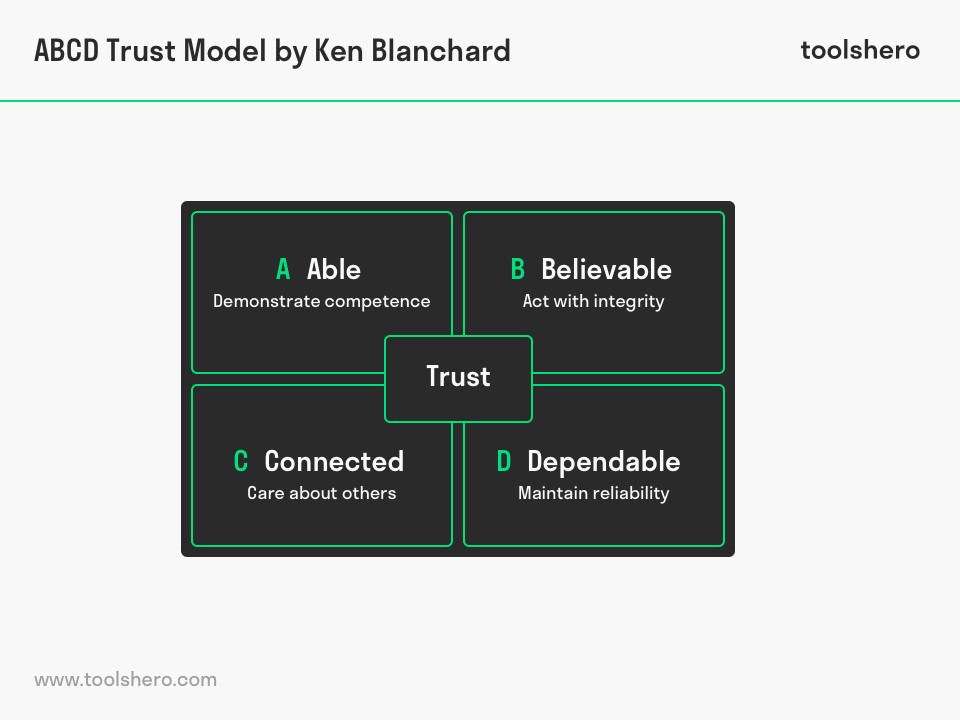
(Mulder,2018)

Team feedback

Leaders must first understand themselves to lead others (Bennis & Townsend, 1989). My second job is in the IT industry, and I lead a team of 12 people. In the early stage, I worked hard with my colleagues to make products. But later, I found that what I need was not professional competence, but operational and management capabilities. My colleague said that I am not like a leader but a normal member. 

This was confirmed later. I am not strict in time management. Each stage allows the team members to delay a bit. Eventually the product is not completed within the time expected. Schrage (2016) said that the most effective growth is constantly challenging the work. “Mistakes are inevitable, but they, too, contribute to your growth and development. You must also know the world as thoroughly as You know yourself” (Bennis & Townsend, 1989). So, I began to focus on self-awareness and leadership at work Cultivate and understanding the world.

learning process

The reality of leadership is very complicated. Chemers (1997) argued that intrinsic factors (thoughts and emotions) interact with interpersonal processes (attraction, communication, and influence) to influence the dynamic external environment. Each aspect brings complexity to the leadership process. Three years later, I became a MBA student. I got the help of mentors and learned by observing others. In the classroom, I learned from the team members the great results of collaboration. This is a treasure hunt from the school to Liverpool Street Station. My team has five people. My team members quickly discussed and assigned this task and quickly started a treasure hunt. I followed the team leader Adam to witness the process of tacit understanding of a team that members do not know each other in a short period of time.

During the 11-week study, I felt different leadership styles and effects. Paul Hersey and Ken Blanchard’s situational leadership model is perfect for our team. They designed these four leadership styles on a parabolic basis. The horizontal axis represents maturity (employee independence) and is expressed as a gradient from high to low. In the opposite direction on the horizontal axis, the instruction behavior from low to high is indicated. This means the level of direction provided to the employee. On the vertical axis, they represent low-to-high support behavior; support for employees. (Mulder, 2012) According to Paul Hersey and Ken Blanchard (1977), leaders must adjust their style based on their maturity. As maturity increases, employee independence increases.
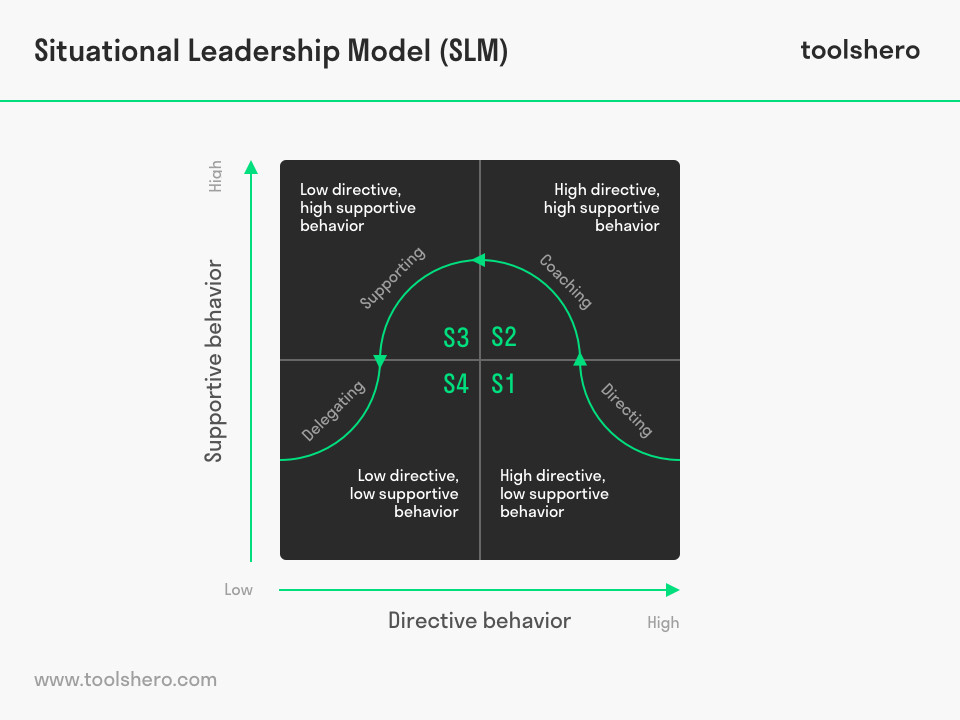
(Mulder, 2012)

The skills I need to become a future leader

My development goal is to be a person with automotive expertise and leadership. It has been said that the highest achievement as a leader is to win the trust and respect. Trust happens when values and behaviors match (Mishra & Mishra., 2008). I hope that in this ever-changing world, I have enough expertise to let the people believe in me, and that I can cooperate and believe in others. When I put things into his hands, I have to trust others. At this stage, my leadership and expertise are not enough. I need to gain more knowledge from my studies and help me to enter the automotive industry. Because for leaders, learning can’t be stopped (Seijts, 2013).

References

Bennis, W. G., & Townsend, R. (1989). On becoming a leader,Vol. 36. Reading, MA: Addison-Wesley. Available at: https://settingupablog.business.blog/wp-content/uploads/2019/04/4cc67-onbecomingaleadersummary.pdf[Accessed 11 Apr. 2019]

Chemers, M. (1997). An integrative theory of leadership. Lawrence Erlbaum Associates, Publishers. ISBN 978-0-8058-2679-1.Available at: https://www.questia.com/library/3643470/an-integrative-theory-of-leadership[Accessed 11 Apr. 2019]

CMI (2014) Developing Trust Checklist 243. Managers.org.uk. Available at: https://www.managers.org.uk/~/media/Files/Campus%20CMI/Checklists%20PDP/Developing%20trust.ashx[Accessed 11 Apr. 2019]

Hersey, P. and Blanchard, K. H. (1977). Management of Organizational Behavior: Utilizing Human Resources.Journals.sagepub.com. Available at: https://journals.sagepub.com/doi/abs/10.1177/105960117700200419[Accessed 11 Apr. 2019]

Mishra, A. K., & Mishra, K. E. (2008). Trust is everything: Become the leader others will follow.Lulu. com.Available at:https://books.google.co.uk/books?hl=zh-CN&lr=&id=GNfgjVno_xgC&oi=fnd&pg=PR1&ots=9DruXDikc8&sig=CoHGZf7qAAr0eXlwC68fHL4YtpM&redir_esc=y#v=onepage&q&f=false[Accessed 11 Apr. 2019]

Mulder, P. (2012). Situational Leadership Model (SLM).ToolsHero.Available at: https://www.toolshero.com/leadership/situational-leadership-hersey-blanchard/[Accessed 11 Apr. 2019]

Mulder, P. (2018).ABCD Trust Model. ToolsHero. Available at:https://www.toolshero.com/leadership/abcd-trust-model/[Accessed 11 Apr. 2019]

ROGERS, K(2018)The 2 Types of Respect Leaders Must Show.Harvard Business Review [online]. Available at: https://hbr.org/ideacast/2018/07/the-2-types-of-respect-leaders-must-show.html[Accessed 11 Apr. 2019]

Schrage, M. (2016) Like It or Not, You Are Always Leading by Example. Harvard Business Review [online]. Available at: https://hbr.org/2016/10/like-it-or-not-you-are-always-leading-by-example  [Accessed 11 Apr. 2019]

Seijts, G (2013) Good leaders never stop learning. Ivey Business Journal. Available at: https://iveybusinessjournal.com/publication/good-leaders-never-stop-learning/[Accessed 11 Apr. 2019]

Walter,E (2015) 12 Leadership Behaviors That Build Team Trust. Forbes.com.Available at:https://www.forbes.com/sites/ekaterinawalter/2015/12/01/12-leadership-behaviors-that-build-team-trust/#1c2e7ae07221
Change Management

Change management is the process by which an organization gets to its future state, and vision. While traditional planning processes delineate the steps on the process, change management attempts to facilitate that process. Change management encompasses the effective strategies and programs to enable those change agents to achieve the new vision. (Lorenzi & Riley,2000)

Regardless of its operational motivation and resources, the complexity of today’s business environment is overwhelming for organizations (Graetz et al., 2006). For example, Brexit has made British companies experience unprecedented challenges. This blog will discuss the automotive industry turmoil caused by Brexit and some of the changes these companies have made in the Brexit event.

The impact of Brexit on the automotive industry

“Brexit” has begun to affect the UK automotive industry. Jaguar Land Rover is a UK-based high-end car manufacturer. Recently, the world’s leading financial analysis agency Standard & Poor’s said that the Jaguar Land Rover credit rating had been lowered from the previous “BB-” to “B +.” In addition, Standard & Poor’s also said that due to the risk of Brexit, if Jaguar Land Rover fails to meet its full-year performance expectations, its rating may be further reduced (Ademcetinkaya, 2019).

The information shows that the Brexit may influence the survival of the British automotive industry. If the UK conducts No-Deal Brexit, it will deal a heavy blow to the auto industry (Winton, 2019). Tariffs, supply chains and markets are currently the main challenges facing for the automotive industry (House of Commons, 2018).

Jaguar Land Rover’s solution.

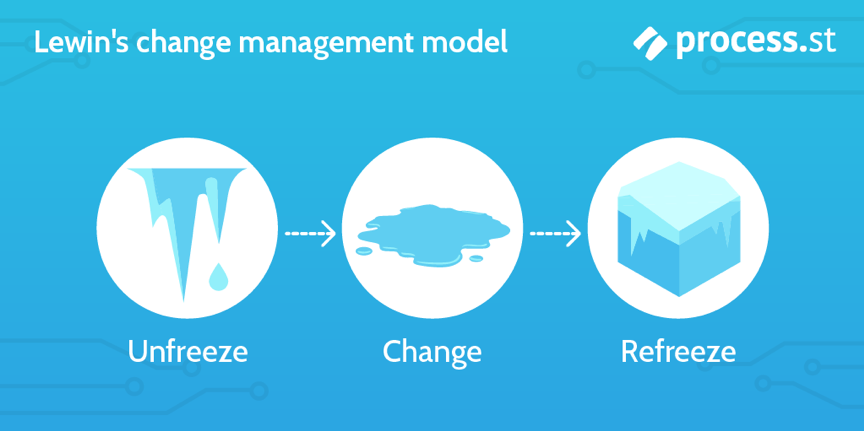
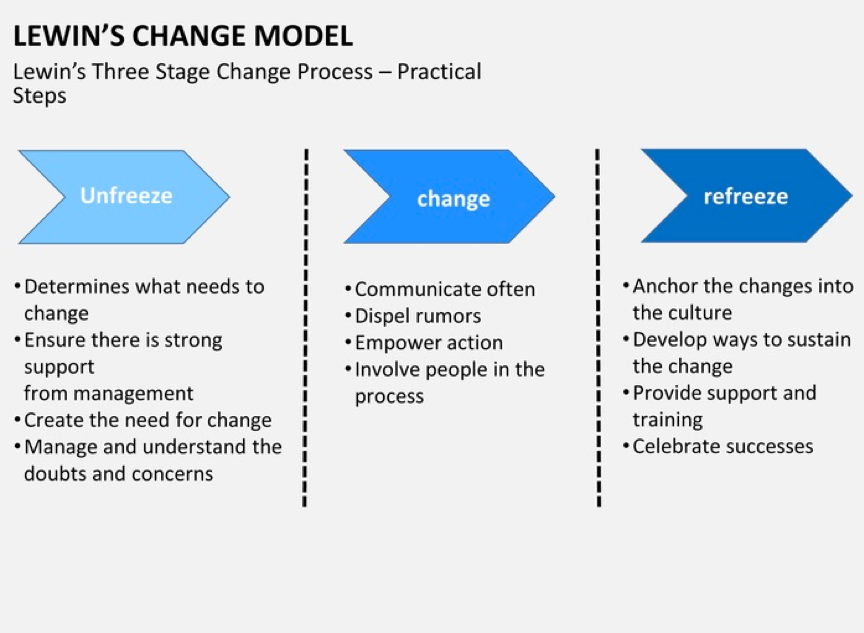
Under the influence of Brexit, change has become crucial. One of the cornerstone models for understanding organizational change was developed by physicist and social scientist Kurt Lewin in the 1940s and is now one of the most popular methods (Mulholland, 2017). Lewin uses an analogy to change the shape of ice to explain organizational changes. His model is called Unfreeze – Change – Refreeze, which refers to the three-stage process of change he describes (Schein, 1996).

(Mulholland,2017)

The first phase of change, the thawing, involves getting the organization ready to accept the necessary changes. This includes breaking the current state of affairs before establishing a new operating model. According to BBC News (2019), Jaguar Land Rover closed their production line again this week to deal with the impact of Brexit. Large multinational companies such as BMW and Toyota, as well as Peugeot, closed their car factories in the UK.

The second phase is to make changes after the thawing phase produces uncertainty. The transition phase is when people begin to address their uncertainty and find new ways of doing things. Jaguar Land Rover announced that it would cut the cost of £2.5 billion over the next 18 months and lay off 4,500 people worldwide, most of which are based in UK (BBC News, 2019). This is a way to cut costs, but it will make Jaguar Land Rover a painful and slow process in managing change.

The third stage is refreezing. When change is taking shape and people accept new ways of working, the organization is ready to start again (Schein, 1996). The external signs of reassessment are stable organizational charts, consistent job descriptions, etc. The restart phase also needs to help people and organizations internalize or institutionalize changes (Mulholland, 2017). This part needs to wait until this month and next month to get a clear result and then make further plans.

Assessment and action-oriented planning

In managing change, radically improving processes and experience can change a company’s destiny at a critical time in its life cycle (Mulholland, 2017). Layoffs are the best option for Jaguar Land Rover when the Brexit situation is uncertain (GIBBS, 2019). Jaguar Land Rover is talking about layoffs and starting voluntary layoffs, which is the best way to eliminate rumors (GI BBS, 2019). The streamlined organization can make the company more cohesive. Management, marketing and executive positions will be the focus of layoffs, which will also help change management to achieve better reforms (Leather, 2019).

(Mulholland, 2017)

learning result

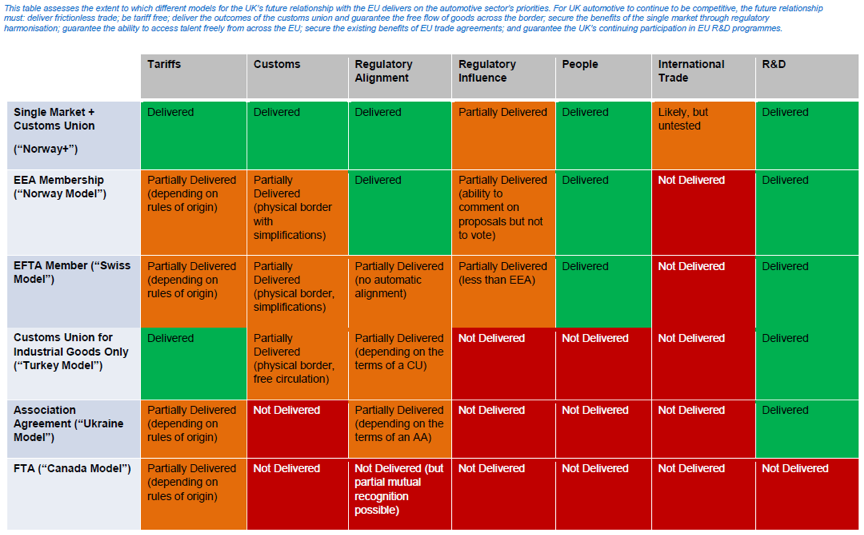
The overall business of the UK’s automotive industry will be reduced, and losses will gradually increase with the uncertainty of Brexit. Because Brexit will have a huge impact on the market mechanism, whether it is tariffs, supply chains, markets, or talent. The action of the planned cycle change will make Jaguar Land Rover reduce losses to a certain extent, but this is the last resort. It is a huge task for managers or leaders to implement change in this context. In general, if there is no agreement to leave the EU, the automotive industry will have to undergo change management. SMMT (2019) assessed future UK and EU trade patterns and their satisfaction with the automotive industry. From the assessment results, it is much better to have a good Brexit agreement than the internal changes that have to be made.

(SMMT,2019)

References

Ademcetinkaya (2019) Jaguar Land Rover Automotive PLC Downgraded To ‘B+’ On Weak Profitability; Ratings Kept On CreditWatch Negative. ademcetinkaya.com.Available at: https://www.ademcetinkaya.com/2018/12/uk-based-jaguar-land-rover-downgraded.html[Accessed 10 Apr. 2019]

BBC News (2019) Discovery Sport sales boost JLR in UK. BBC News.Available at: https://www.bbc.co.uk/news/topics/c4mlqp91m90t/jaguar-land-rover[Accessed 10 Apr. 2019]

BBC News (2019) Jaguar Land Rover starts Brexit shutdown. BBC News. Available at: https://www.bbc.co.uk/news/uk-england-47845057?intlink_from_url=https://www.bbc.co.uk/news/topics/c4mlqp91m90t/jaguar-land-rover&link_location=live-reporting-story[Accessed 10 Apr. 2019]

Burnes, B. (2009) Managing Change. 5th Edition, Financial Times Press.Available at:https://books.google.co.uk/books?hl=en&lr=&id=9J5Ri4xatEMC&oi=fnd&pg=PP11&dq=Managing+Change&ots=q4qafxhZaO&sig=dkFbBonEUXAMccdY5IRpaBXKSug#v=onepage&q=Managing%20Change&f=false[Accessed 6 Apr. 2019]

GIBBS, N (2019) Why JLR is losing money and how it plans to return to profit. Autonews. Available at: https://www.autonews.com/manufacturing/why-jlr-losing-money-and-how-it-plans-return-profit[Accessed 10 Apr. 2019]

Graetz, F., Rimmer, M., Lawrence, A., Smith, A.(2006) Managing organizational change, 2nd Australasian ed.Malden, Mass. Available at:http://dro.deakin.edu.au/view/DU:30010399[Accessed 10 Apr. 2019]

House of Commons(2018)The impact of Brexit on the automotive sector. The House of Commons,Fifth Report of Session 2017–19.Available at: https://publications.parliament.uk/pa/cm201719/cmselect/cmbeis/379/379.pdf[Accessed 8 Apr. 2019]

Leather, H (2019) Jaguar Land Rover to pause production due to Brexit uncertainty. Shropshirestar.com. Available at: https://www.shropshirestar.com/news/business/2019/01/25/jaguar-land-rover-to-pause-production-due-to-brexit-uncertainty/[Accessed 8 Apr. 2019]

Lorenzi, N.M& Riley, R.T(2000) Managing Change: An Overview. Journal of the American Medical Informatics Association, 7(2), pp. 116–124. Available at: https://doi.org/10.1136/jamia.2000.0070116[Accessed 10 Apr. 2019]

Mulholland,B (2017) 8 Critical Change Management Models to Evolve and Survive. Process .St. Available at: https://www.process.st/change-management-models/[Accessed 10 Apr. 2019]

Schein, E.H (1996) Kurt Lewin’s change theory in the field and in the classroom: Notes toward a model of managed learning. Systems practice, 9(1), pp. 27–47. Available at: https://link.springer.com/article/10.1007/BF02173417[Accessed 7 Apr. 2019]

SMMT (2019)INDUSTRY TOPICS: Brexit. Smmt.co.uk.Available at: https://www.smmt.co.uk/industry-topics/brexit/[Accessed 7 Apr. 2019]

Winton, N (2019) No-Deal Brexit Would Decimate Britain’s Auto Industry, Or Maybe Not. Forbes.com.Available at: https://www.forbes.com/sites/neilwinton/2019/03/12/no-deal-brexit-would-decimate-britains-auto-industry-or-maybe-not/#13c75418defa[Accessed 8 Apr. 2019]

Contemporary Leadership Styles: How relevant are they in today’s changing world?

Nash (1929)suggested that “Leadership implies influencing change in the conduct of people.”The influence of leadership style is a central issue in leadership research: the attitudinal patterns of leaders and their behaviors (Anderson and Sun, 2015). This blog intends to discuss the direction of leadership theories in a changing world through Volvo’s case.

The 21st century is an economic era where knowledge is the core commodity, and a rapid production of knowledge and innovation is critical to the survival of organizations (Boisot, 1998). Hitt (1998) mentions that “we are on the edge of an era,” in the past. Leadership methods based on rigid controls and mandatory orders are decreasingly compatible (Manville & Ober, 2003). 

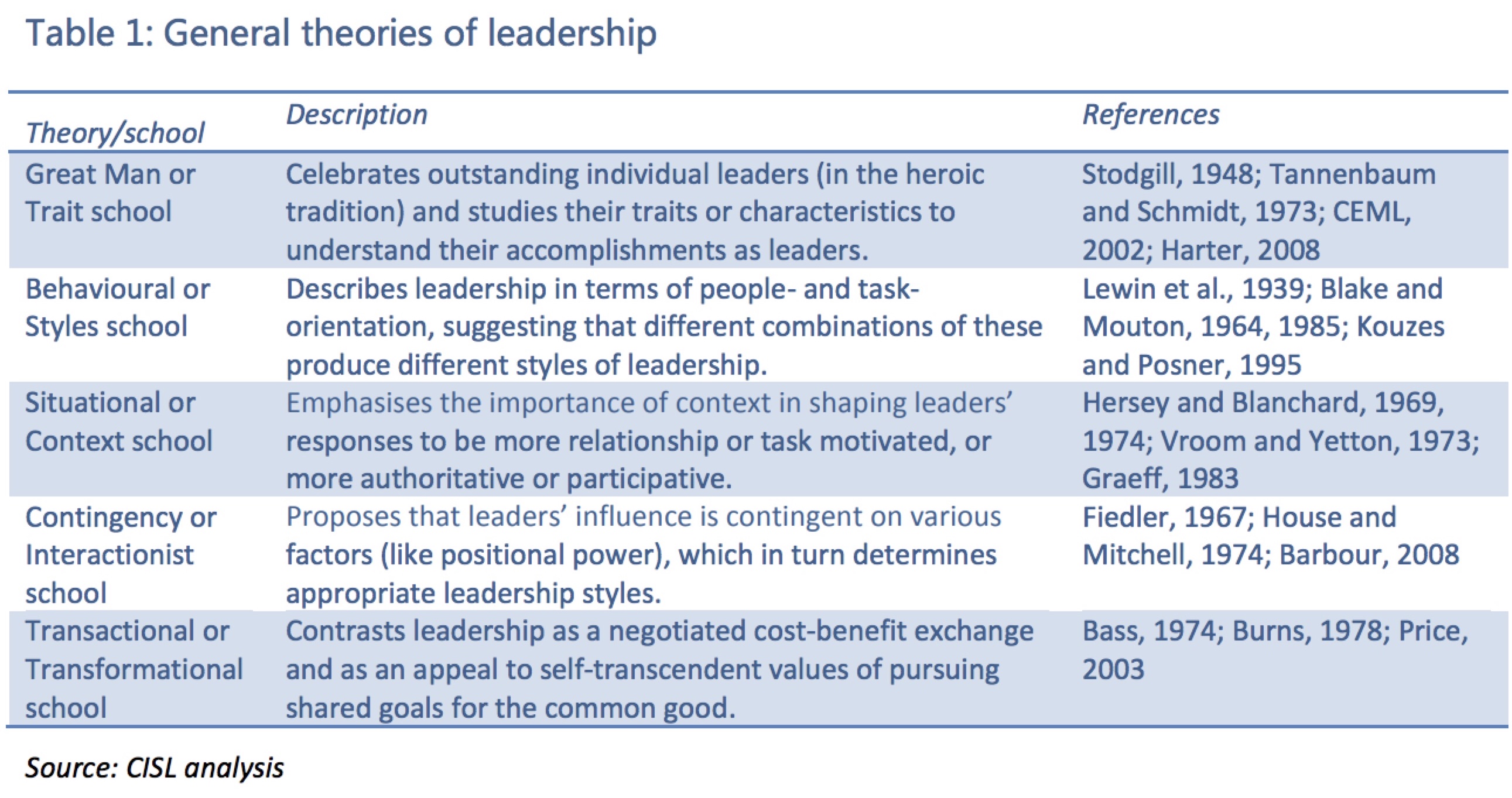
Early theories tended to focus on the characteristics and behaviors of successful leaders, and later theories began to discuss the pursuit of the role and background nature of leaders.

(Bolden et al, 2003)

The challenge of modern leadership theories

Uhl-Bien et al. (2007) suggest that the leadership models of the last century have been top-down. These models are very effective for the economy premised in which physical production, but not suitable for a knowledge-based economy. They propose leadership as a complex, interactive, dynamic that produces adaptive outcomes (such as learning, innovation, and adaptability).

Anderson and Sun (2015) reviewed several works of literature that have emerged since 2000 and the various new leadership styles they have proposed: ideological leadership, pragmatic leadership, authentic leadership, ethical leadership, spiritual leadership, distributed leadership, integrative public leadership and servant leadership.

On the other hand, some experts and scholars have criticized these leadership theories, arguing that they are mainly male theories based on Western work practices. Eagly is one of the essential researchers at this stage. Eagly and Johannesen-Schmidt (2002) provide a framework that incorporates many of the complexities of the empirical literature on female and male leadership styles. 

Beaman et al. (2012) used a random natural experiment in India to demonstrate those female leaders can influence the career aspirations and education of adolescent girls.

Research on female leadership behaviors suggests that women tend to adopt a more lenient strategy than men when it comes to employee performance and goal achievement. Women often form alliances adaptively when engaging in competitive activities, while men are more exploitative and use partnerships to obtain personal benefits (Brad Chapman, 2017).

Gender equality challenge in the automotive industry

According to Eagly’s (2007), although women have excellent leadership skills, they are more likely than men to demonstrate leadership styles that are relevant to the effective performance of leaders. But more people prefer men than women as being their bosses, and women are more difficult to become leaders than men. The increasing attention of women leaders reflects significant progress in gender equality, but the issue of inequality cannot be eliminated. This is especially true in the automotive industry, 90 percent of auto examples say they need to change how they attract and retain talent, but only 10 percent say they do a good job of bringing women onboard (Autonews, 2016).

Sweden is recognized as a leader in affirmative action, and Volvo in Sweden faces the challenge of gender equality.

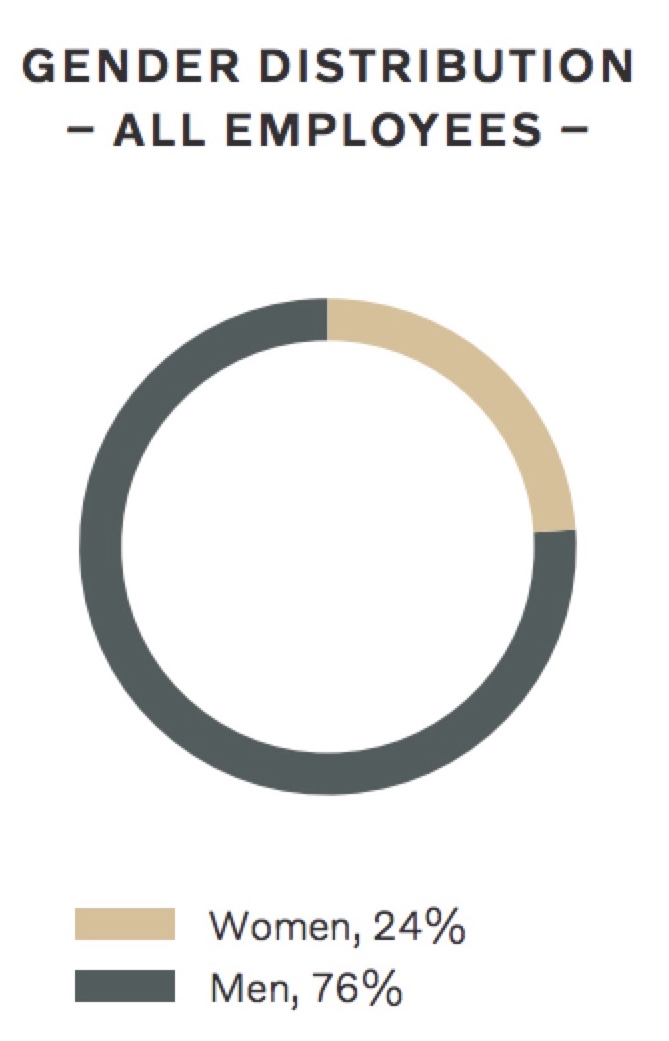
Volvo Car is committed to achieve an inclusive and gender balance with leaders. They plan to have a leadership position of greater than or equal to 35% by 2020, which should be held by women (Volvocars, 2019).

(Volvocars, 2019)

Future development of leadership style

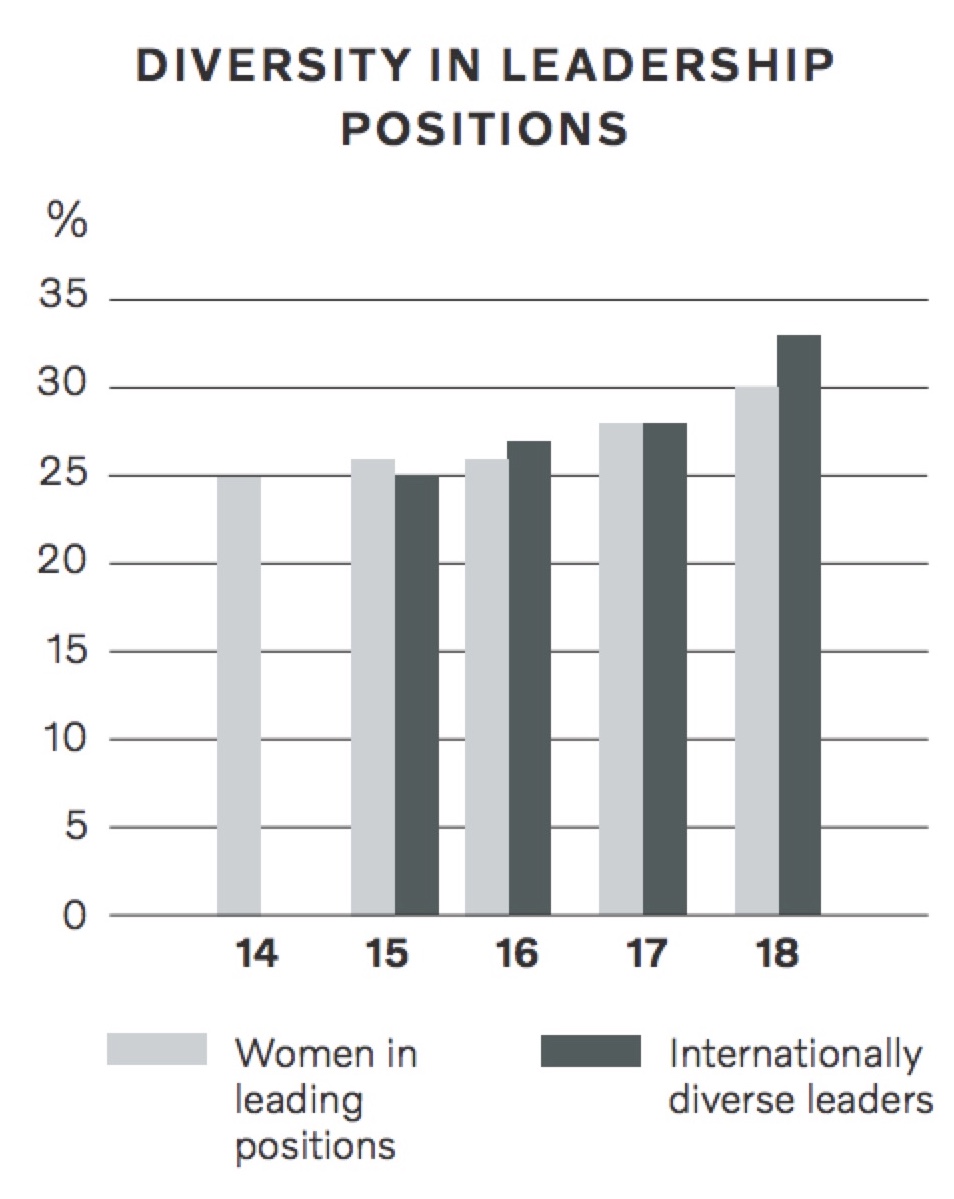
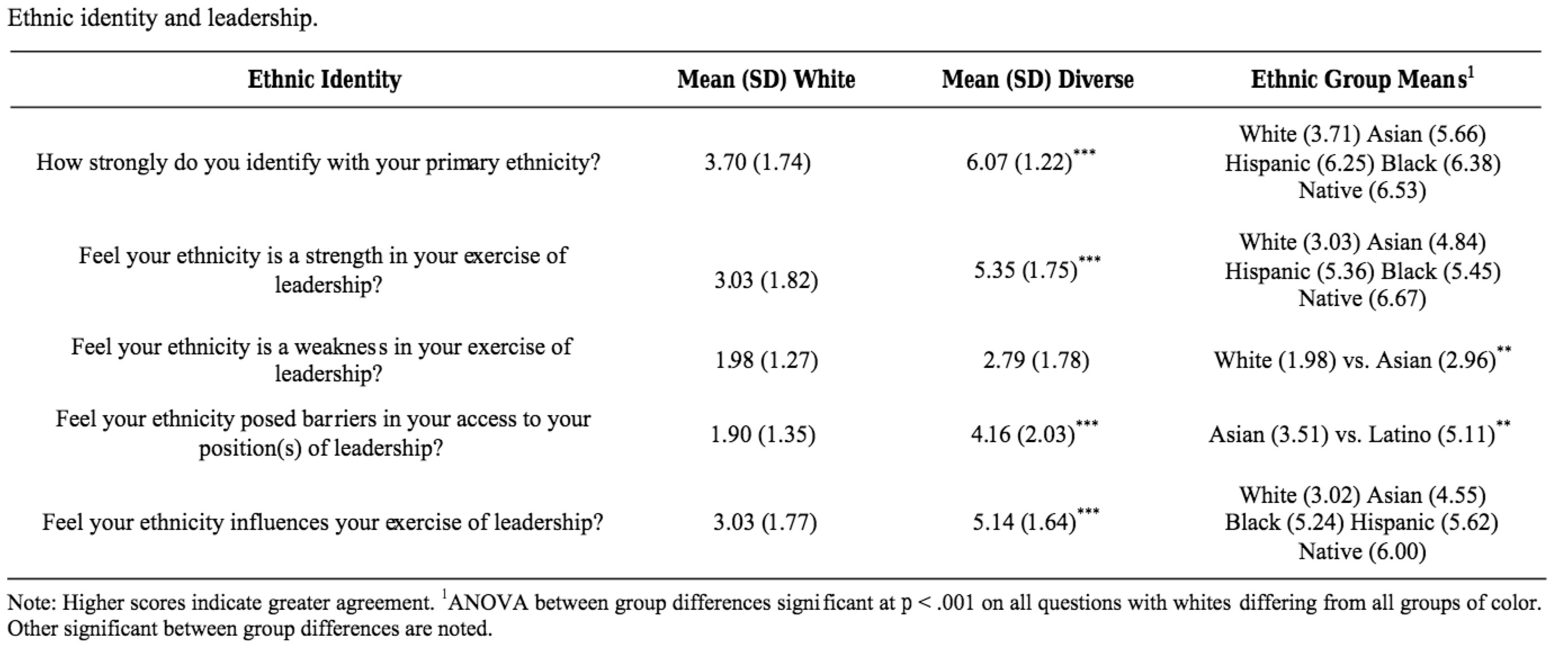
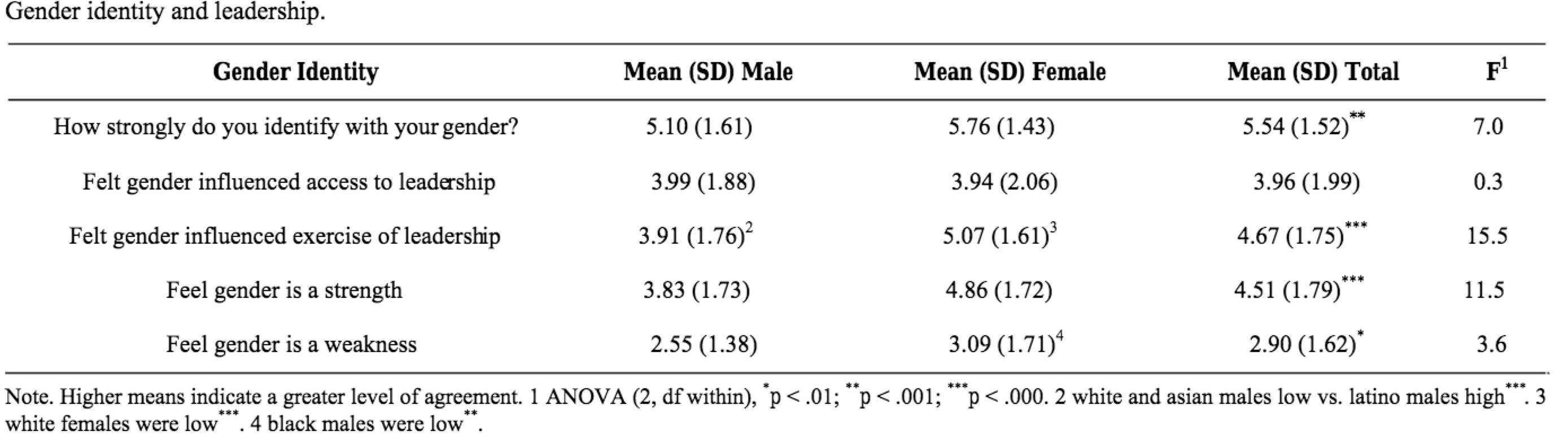
Eagly and Chin (2010) argue that in a changing world, there must be a theory that is parallel to change and diversity, not only culturally but also sexually (pp. 216-224). Chin (2013) concludes in a survey on gender and population that the future leadership of the world is diversified. Diversity leadership is to be inclusive of all groups and all perspectives.

(Chin, 2013)

(Chin, 2013)

Volvo is not only a Swedish company, it is also a large multinational company, and they are particularly good at diversification. Volvo currently has more than 32% of its leadership positions as non-Swedish and has made plans to increase by more than 3% in the next two years (Volvocars, 2019). So the Volvo Group has done an excellent job in terms of gender, geography and ethnicity. 

To some extent, contemporary leadership style is closely related to the changing world. A variety of leadership styles are parallel. On one hand, in line with the needs of organizational development. On the other hand, the inevitable choice of corporate management and humanization, to cope with this era of knowledge and innovation. 

References

Anderson, M.H., Sun, P.Y.T. (2015) Reviewing Leadership Styles: Overlaps and the Need for a New ‘Full‐Range’ Theory. IJMR[Online],19(1),pp.76-96. Available at: https://onlinelibrary.wiley.com/doi/abs/10.1111/ijmr.12082[Accessed 6 Mar. 2019]

Autonews (2016) Auto industry must do more to close gender gap in leadership roles, report finds. Auto News[Online].Available at: https://www.autonews.com/article/20160428/OEM/160429825/auto-industry-must-do-more-to-close-gender-gap-in-leadership-roles-report-finds[Accessed 6 Mar. 2019]

Bettis, R.A., Hitt, M.A. (1995) The new competitive landscape. Strategic Management[Online],16 (S1), pp. 7-19. Available at: https://onlinelibrary.wiley.com/doi/abs/10.1002/smj.4250160915[Accessed 6 Mar. 2019]

Beaman, L., Duflo, E., Pande, R., Topalova, P. (2012) Female Leadership Raises Aspirations and Educational Attainment for Girls: A Policy Experiment in India.Science[Online], 335(6068), pp. 582-586. Available at: http://science.sciencemag.org/content/335/6068/582[Accessed 6 Mar. 2019]

Bolden, R., Gosling, J., Marturano, A. & Dennison, P. (2003)A Review of Leadership Theory and Competency Frameworks. Centre for Leadership Studies, University of Exeter. Available at:https://ore.exeter.ac.uk/repository/bitstream/handle/10036/17494/mgmt_standards.pdf?sequence=1[Accessed 6 Mar. 2019]

Janka I. Stoker., Mandy Van der Velde and Joris Lammers(2012)Factors Relating to Managerial Stereotypes: The Role of Gender of the Employee and the Manager and Management Gender Ratio. Journal of Business and Psychology [Online], 27(1), pp.31–42. Available at: https://www.ncbi.nlm.nih.gov/pmc/articles/PMC3278615/[Accessed 6 Mar. 2019]

Brad Chapman, J. (2017) COMPARISON OF MALE AND FEMALE LEADERSHIP STYLES. Academy of Management[Online], 18(3). Available at: https://journals.aom.org/doi/abs/10.5465/255695[Accessed 6 Mar. 2019]

Boisot, M.H. (1998) Knowledge assets: Securing competitive advantage in the information economy. Oxford University Press, Oxford[Online]. Available at: https://books.google.co.uk/books?hl=en&lr=&id=6-BOHeSqkk0C&oi=fnd&pg=PR19&ots=4SzWeOnbnd&sig=3mqtBHjt2MqwFiOrL9-pc_0CdjA&redir_esc=y#v=onepage&q&f=false[Accessed 6 Mar. 2019]

Burke, S., Collins, K.M. (2001) Gender differences in leadership styles and management skills. Women in Management Review[Online], 16 (5), pp.244-257. Available at: https://doi.org/10.1108/09649420110395728[Accessed 6 Mar. 2019]

Chin, J. L. (2013) Diversity Leadership: Influence of Ethnicity, Gender, and Minority Status. Open Journal of Leadership[Online], 2 (1), 1-10. Available at: https://www.researchgate.net/publication/262837328_Chin_J_L_2013_Diversity_Leadership_Influence_of_Ethnicity_Gender_and_Minority_Status_Open_Journal_of_Leadership_2_1_1-10_Published_Online_March_2013_in_SciRes_httpwwwscirporgjournalojl[Accessed 6 Mar. 2019]

Chin, J.L. & Trimble, J. E.(2015)Diversity and Leadership. http://sk.sagepub.com/books/diversity-and-leadership/i1216.xml[Accessed 6 Mar. 2019]

Eagly, A.H. (2017) Female Leadership Advantage and Disadvantage: Resolving the Contradictions. Psychology of Women Quarterly[Online], 31(1), pp.1-12. Available at: https://journals.sagepub.com/doi/abs/10.1111/j.1471-6402.2007.00326.x[Accessed 6 Mar. 2019]

Eagly, A. H., and Chin, J. L. (2010). Diversity and leadership in a changing world. American Psychologist, 65,216–224. [Accessed 6 Mar. 2019]

Eagly, A.H., Johannesen‐Schmidt, M.C. (2002)The Leadership Styles of Women and Men. Social Issues[Online], 57(4), pp. 781-797. Available at: https://spssi.onlinelibrary.wiley.com/doi/pdf/10.1111/0022-4537.00241[Accessed 6 Mar. 2019]

Hitt, M.A. (1998) Presidential address: Twenty-first-century organizations: Business firms, business schools, and the academy. Academy of Management Review [Online], 23 (2), pp. 218-224. Available at: https://journals.aom.org/doi/full/10.5465/amr.1998.533223  [Accessed 6 Mar. 2019]

Manville, B., Ober, J.(2003)Beyond Empowerment: Building a Company of Citizens. Harvard Business Review [Online], 81(1), pp.48-53+139. Available at: https://www.scopus.com/record/display.uri?eid=2-s2.0-0037263943&origin=inward&txGid=35253757a2f2881dd251354f282d358e[Accessed 6 Mar. 2019]

Nash, J. B. (1929) Leadership. Phi Delta Kappa, vol. 12, pp.24–25. [Accessed 6 Mar. 2019]

Uhl-Bien, M., Marion, R., McKelvey, B. (2007) Complexity Leadership Theory: Shifting leadership from the industrial age to the knowledge era. ScienceDirect[Online], 18(4), pp.298-318.Available at: https://www.sciencedirect.com/science/article/pii/S1048984307000689#bib106[Accessed 6 Mar. 2019]

Van Engen, M.L., Van der Leeden,R., Willemsen, T.M. (2010)Gender, context and leadership styles: A field study. Occupational and Organizational Psychology[Online],74(5),pp.581-598. Available at: https://onlinelibrary.wiley.com/doi/abs/10.1348/096317901167532[Accessed 6 Mar. 2019]

Van Wart, M. (2013) Lessons from Leadership Theory and the Contemporary Challenges of Leaders. Public Administration Review[Online], 73(4), pp.553-565.Available at:https://onlinelibrary.wiley.com/doi/full/10.1111/puar.12069[Accessed 6 Mar. 2019]

Can cultures be managed within organizations?

What is organizational culture?

The organizational culture was first introduced by Dr. Elliott Jaquesin his book “The Changing Culture of a Factory” published in 1951 (Hatch, 2013). Organizational culture refers to the long-standing beliefs and values of the organization (Tsai, 2011). In layman’s terms, every employee understands what is beneficial for the company, consciously forms and abides by the code of conduct. This blog will use the Laloux Culture Model to discuss the Agile Management Culture of Volvo Company in Sweden, provide suggestions to help Volvo implement its organizational culture adjustment.

Laloux cultural model

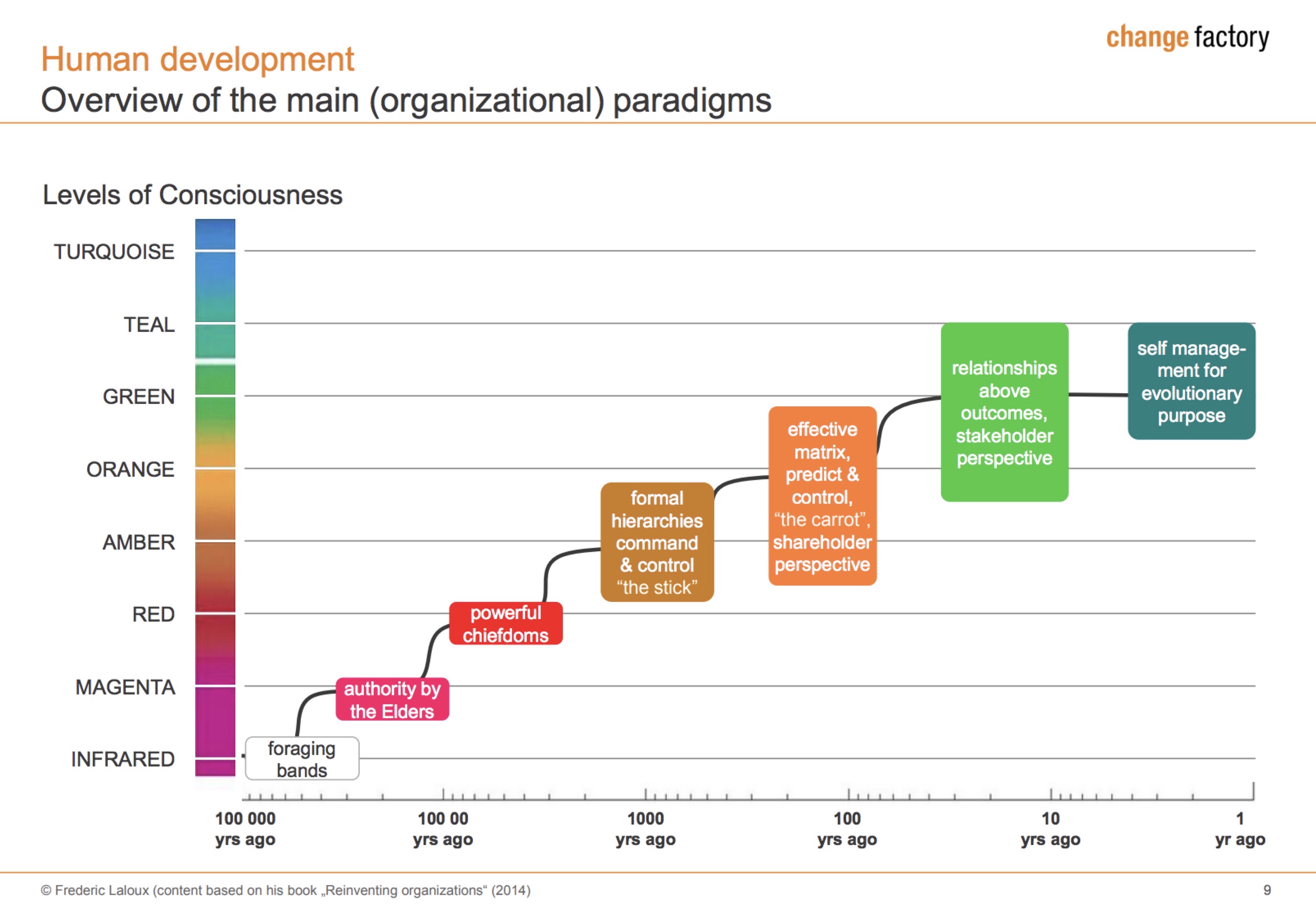
Frederic Laloux (2014) outlines how humans have been organized for centuries.

Around 10,000 years ago, humanity started organizing itself in chiefdoms and proto-empires. The first real organizations emerged in the form of small conquests of the army. These organizations labeled “Red,” are crude.

Starting around 4000 BC in Mesopotamia, humanity entered the Amber era of agriculture, state bureaucracies and organized religion, and people learned to exercise self-discipline and self-control (Laloux, 2015).

From the Renaissance to the present, the most popular point of view can be arguably the predominant perspective of most leaders in business and politics, which is marked as “orange” by Laloux (2015). It is a complex mechanism that can be understood and utilized through scientific and empirical investigations. Based on these, the Laloux culture model describes Volvo in a near-perspective way.

(Laloux, 2014)

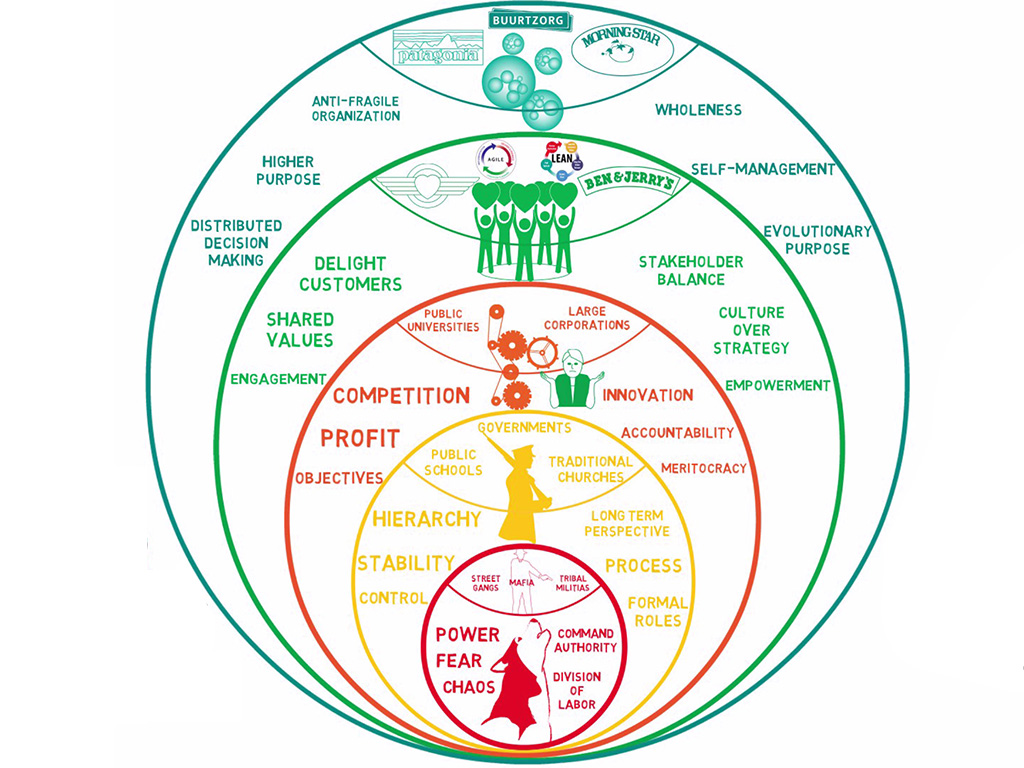
Laloux cultural model helps Volvo to observe and react to cultural change. It provides the location (orange) of the enterprise and the possible future (green or blue) of the enterprise, which helps to identify the benefits of change. In this chart, the Orange organization’s goal is to get ahead, to succeed in a socially acceptable way. “Green” stresses cooperation rather than competition and strives for equality, solidarity, and tolerance.  And“blue” has established structures and practices that people have a high degree of autonomy in their field and is responsible for coordinating with others. Power and control are deeply embedded throughout the organization and no longer tied to the specific positions of a few top leaders.

Agile Management and Volvo Challenges

The primary challenge for Volvo is the transformation from the traditional industry into a new technology industry, which introduces an agile management culture (Ebrahimpur, 2001). They want to use of self-managed teams to accelerate the creation of new products and processes. And to realize the breakthrough in the three management of innovation, accountability and elite management in the orange phase mentioned by Laloux (2015).

However, in a face-to-face conversation, Volvo employees say that the process of one of their departments was like this: the senior manager assigned the plan with the shortened time limit to the intermediate supervisor. Then release the order. The people in each link did not understand very well the work of the previous link. As a result, the actual front-line employees have no way to understand the instructions of senior leaders fully, and the time for the middle leaders to find problems is not enough. In the end, the top leaders of their department were very dissatisfied with the crazy overtime work results of in the fourth quarter of last year, the managers and employees of the entire product line blamed each other and the team spirit deteriorated.

Implementing Organizational Culture Adjustment

(Laloux,2014)

The orange perspective recognizes the value of each aspect and the role of agile leaders. It helps Volvo to become better at the innovation and competitive advantage that it is most concerned. Agile way of thinking and practice will help achieve corporate values and impressive results, making employees more attractive and fulfilling.

Volvo needs a comprehensive assessment of the organization(Volvocars,2016). Identify key aspects of agile awareness, knowledge, support and opposition, and practical skills, and then develop strategies to bring about a cultural change. This means having to change the mindset, combine agility and mobility in business operations.

The first step is to develop leadership behavior, because the agility of the supervisor determines whether the organization continues to implement agility. According to Wouter Aghina (2015), promoting agility must be successful from top to bottom.

Secondly, improve the effectiveness of the most basic communication. Daniel Newman (2016) says that agile requires the connection. When a high-level manager issues an order, it needs to be efficient to let the most basic employees understand the order correctly.

Finally, Volvo should give employees full autonomy and build a team of mutual trust. Take employees as wealth, strengthen communication and enhance team building (Aghina,2015).

References

Aghina, W (2015) Agility: It rhymes with stability. McKinsey [Online]. Available at: https://www.mckinsey.com/business-functions/organization/our-insights/agility-it-rhymes-with-stability [Accsessed 5 Mar. 2019]

Ebrahimpur, G (2001) Restructuring for agility at Volvo Car Technical Service (VCTS). EUROPEAN JOURNAL OF INNOVATION MANAGEMENT; VOLUME 4; ISSUE 2[Online].Available at: https://www.emeraldinsight.com/doi/abs/10.1108/14601060110390558 [Accessed 26 Feb.2018]

Hatch, MJ (2013). Organization theory: modern, symbolic, and postmodern perspectives. Cunliffe, Ann L. (Third ed.). Oxford, United Kingdom. p. 161. ISBN 978-0199640379. OCLC 809554483. [Accessed 18 Feb. 2019]

Laloux,F (2014) Reinventing organizations. Change Factory GmbH [Online]. Available at: http://www.reinventingorganizations.com/uploads/2/1/9/8/21988088/140305_laloux_reinventing_organizations.pdf [Accessed 18 Feb. 2019].

Laloux, F (2015) The Future of Management Is Teal. Strategy-business [Online]. Available at: https://www.strategy-business.com/article/00344?gko=10921 [Accessed 26 Feb. 2019].

Newman, D (2016) Agile Companies Need To Change Their Communication Models. Forbes [Online]. Available at: https://www.forbes.com/sites/danielnewman/2016/06/14/agile-companies-need-to-change-their-communication-models/#1ceffbcc3eee  [Accsessed 5 Mar. 2019]

Tsai, Y (2011). Relationship between Organizational Culture, Leadership Behavior and Job Satisfaction. BMC Health Serv Res; 2011; 11: 98[Online]. Available at: https://www.ncbi.nlm.nih.gov/pmc/articles/PMC3123547/ [Accessed 18 Feb. 2019]

Volvocars (2016) Volvo car group annual report 2016. Volvocars.com [Online]. Available at: https://investors.volvocars.com/~/media/Files/V/Volvo-Cars-IR/results-center/2016/annualreport2016.pdf [Accessed 5 Mar. 2019]